Want a Patio That Looks Like Stone or Pavers? How Decorative Concrete Mimics Them
September 19, 2026
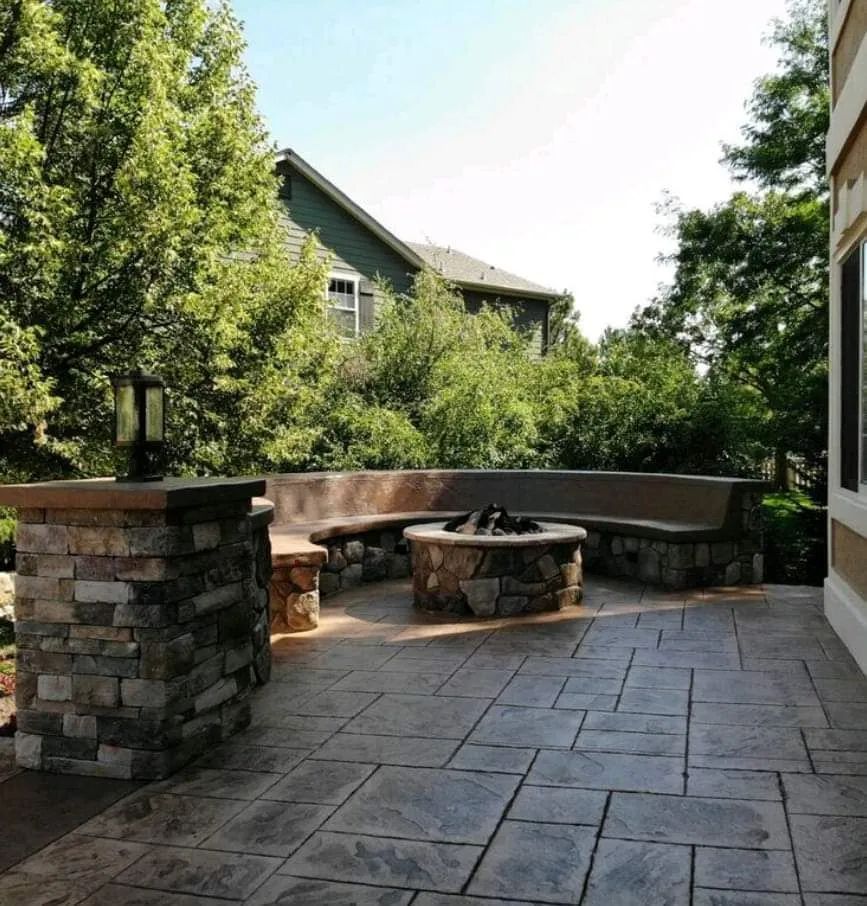
Quick Answer: Decorative concrete recreates the look of natural stone or pavers with texture mats pressed into the wet surface, layered coloring that reproduces mineral variation, and hand-tooled joint lines that mimic mortar or grout. From a normal viewing distance, the result reads as a real stone or paver surface. But it pours as one continuous slab instead of hundreds of individual pieces, which is why decorative concrete patios tend to need less ongoing upkeep than loose-laid stone or pavers over the years.
How Acid Stains Create Depth
Why Homeowners Chase the Stone or Paver Look in the First Place
Natural stone and pavers carry visual weight plain gray concrete doesn't have. Flagstone reads as custom and high-end, while cobblestone and brick pavers suggest an older, established property. Slate brings a quiet, layered elegance suited to Front Range homes, from mountain-modern to traditional brick ranch.
What many homeowners don't realize is how much upkeep real stone and pavers demand. Individual pieces, whether natural stone or manufactured pavers, have joints, and those gaps collect soil, seed, and moisture. Over time, weeds push through, joint sand washes out, and pieces settle unevenly.
Decorative concrete delivers the same texture, color variation, and custom look without individual units. The pattern is imprinted and colored into one continuous pour, so there's no joint for weeds and no sand to refresh. That's the real appeal. Here's how the technique gets there.
How Acid Stains Create Depth
How Decorative Concrete Actually Recreates Stone and Paver Patterns
The visual illusion comes from a layered process, and skipping steps is usually why a stamped patio ends up looking flat or obviously fake instead of convincing.
Texture Mats And Skins
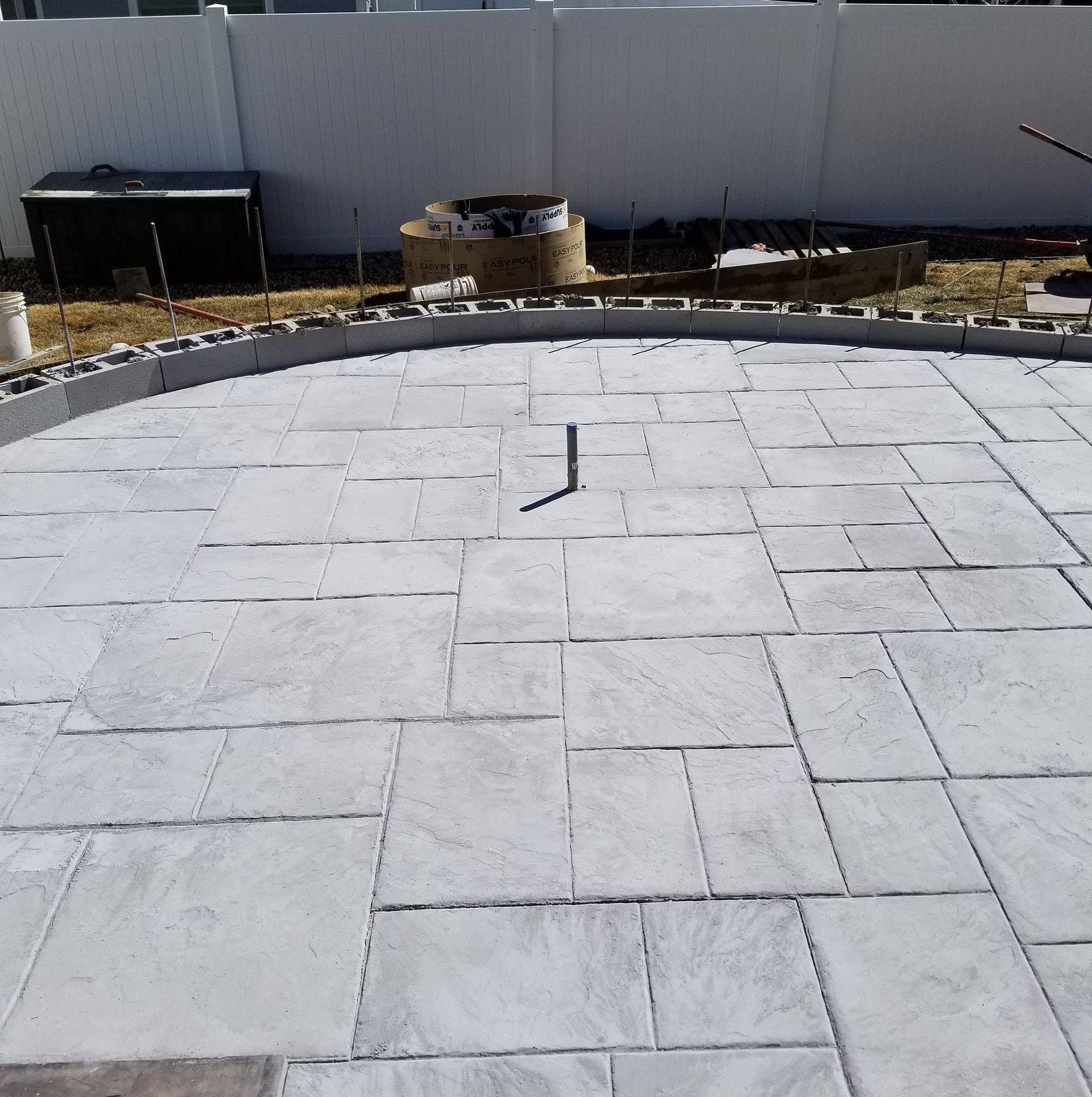
Contractors press flexible texture mats into plastic concrete before it sets. Cast from real stone, brick, and paver surfaces, these mats reproduce authentic grain, cleft, and edge details. Common patterns include slate, flagstone, cobblestone, brick, and travertine for realistic finishes.
Large-Format Versus Segmented Layouts
Older stamping tools required smaller sections and careful alignment to prevent visible seams or repetitive patterns. Modern large-format mats cover more area per placement and use built-in magnets for alignment, creating smoother layouts with fewer mechanical-looking repeats across larger patios.
Texturing Skins For A Subtler Finish
Texturing skins create stone-like surfaces without strong pattern lines. Their softer edges can reproduce the pitted, uneven texture of natural cleft stone while avoiding repetitive joints. This approach works especially well when homeowners want an organic, less geometric concrete appearance.
How Acid Stains Create Depth
Getting the Mineral Variation Right: Color Techniques That Sell the Illusion
Texture alone doesn't finish the job. Real stone and pavers have color variation within each individual piece and from piece to piece, and matching that variation is what separates a convincing decorative concrete patio from one that reads as an obvious pattern stamped onto a flat gray slab.
Integral Color
Integral color mixes pigment directly into concrete before pouring, creating a consistent base tone throughout the slab. It is efficient and provides a foundation for additional coloring techniques, but used alone, it can appear too uniform compared with the natural variation found in real stone.
Color Hardener
Dry-shake color hardener is broadcast over the concrete surface before stamping, then worked into the top layer. Besides adding color, it densifies and strengthens the surface, making it useful for driveways and busy patios. It also allows custom color blends beyond standard integral color options.
Antiquing Release And Accent Color
A contrasting antiquing release agent sits between the stamp mat and wet concrete during stamping. As pressure transfers the pattern, release color settles into texture lines and low areas, creating mottled, multi-tone variation that resembles mineral deposits in quarried stone and prevents flat-looking results overall.
Layered Staining For Existing Or Cured Concrete
For existing or cured concrete, layered acid or water-based stains can create variegated color without replacing the slab. Contractors may combine two or three accent shades, deepening selected areas to mimic natural stone's darker veining, lighter patches, and irregular color variation across the surface naturally.
How Acid Stains Create Depth
Joint Lines and Edge Detailing: The Details That Make It Convincing
Tip: Ask to see a sample panel or a photo of a completed project using the exact pattern and color combination you're considering before committing to the full patio. Color hardener, release agent, and stamp pattern can look different combined than they do described separately, and a sample gives you an honest preview instead of a guess.
Beyond pattern and color, the details that most convince people they're looking at real stone or pavers are the joint lines. Contractors hand-tool these lines into the wet concrete after stamping, or hand-groove them for patterns where the mat itself doesn't fully define every seam, replicating the look of mortar joints between individual stones or the sand joints between pavers. Getting the joint width, depth, and spacing right matters here. Too uniform and it reads as a printed pattern rather than a hand-laid surface. Too irregular and it can look sloppy instead of natural.
Edge detailing carries a lot of that same weight. A hand-tooled border in a contrasting pattern, brick running bond around the perimeter of an ashlar slate field, for example, adds visual depth and mimics the way a real stone patio is often finished with a distinct edge material. Rounded or chiseled edge profiles along steps, walls, or the patio perimeter also help sell the stone illusion, since a crisp, machine-square edge is one of the fastest ways for a stamped surface to look like what it is instead of what it's imitating.
How Acid Stains Create Depth
Why Decorative Concrete Holds Up Better Than Loose-Laid Stone or Pavers Here
Northern Colorado's clay soil and freeze-thaw cycles are hard on any hardscape, but they treat a monolithic concrete slab differently than they treat a surface built from individual units. Pavers and dry-laid stone rely on a compacted base and jointing material to keep every piece in place. When clay soil expands and contracts with moisture, or when repeated freeze-thaw cycles heave the base beneath the surface, individual pavers can shift, tilt, or settle unevenly relative to their neighbors, since each piece is only as stable as the small patch of base directly under it. A poured concrete patio spreads that same stress across one continuous slab reinforced and jointed as a system, which is generally more forgiving of the kind of minor base movement this region deals with every winter.
But that doesn't mean a
decorative concrete patio is immune to the ground beneath it. It still needs a properly compacted base, adequate slab thickness, and control joints placed where the concrete is meant to crack as it naturally contracts and expands with temperature. What changes is the ongoing maintenance. No joint sand to replace after spring runoff. No seasonal weeding between pieces, no re-leveling stones that have settled unevenly. What decorative concrete does need is periodic resealing to protect the color and texture from UV exposure and de-icing salt, and that's a different kind of upkeep than the physical labor loose-laid materials ask for.
Warning: A decorative concrete patio that skips proper base compaction or control joint placement to save a step will crack in ways that are much harder to repair invisibly than a settled paver, since you can't simply lift and reset a section of one continuous slab the way you can with individual pieces. If a contractor is vague about base prep or joint layout when quoting a stamped or stained patio, that's worth pressing on before you sign off on a design.
Choosing a Pattern and Color Palette for Your Property
The right pattern depends on what you're trying to evoke and what already exists on your property. Ashlar slate, with its irregular rectangular pieces in varying sizes, tends to suit both modern and traditional home exteriors and is one of the more versatile choices for a patio that needs to work with existing landscaping and hardscaping. Random-cut flagstone leans more rustic and organic, and it pairs well with natural stone retaining walls or a more informal backyard layout. Running bond brick or cobblestone patterns bring an older, more structured look, often used for walkways, borders, or smaller accent areas rather than an entire large patio, since the repetition reads more obviously at scale. Travertine-style patterns, with their pitted, cream-toned surface, work well for homeowners chasing a Mediterranean or Southwest aesthetic.
Color palette matters just as much as pattern. A warmer palette of tans, browns, and rust tones tends to blend into the foothills and open ground around a Northern Colorado property and complements brick or stucco exteriors. Cooler grays and blue-grays read more contemporary and pair well with stucco, stone veneer, or modern siding. Whatever direction you go, matching the patio's palette to your home's existing exterior materials, rather than picking a pattern in isolation, is what makes the finished space look intentional instead of like an add-on.
Where This Technique Works Well Beyond the Patio Itself
Once a stone or paver look is established on the patio, extending that same pattern and color to walkways, steps, and pool decks creates a cohesive outdoor space instead of a collection of mismatched surfaces. A stamped walkway in the same ashlar pattern connecting the patio to a side gate, or a matching border wrapping around a fire pit area, reads as one designed hardscape rather than several separate projects tackled at different times. This is also where decorative concrete has a practical edge over real stone in transition areas: steps and pool decks both benefit from a broom-finished or lightly textured surface for slip resistance, and that texture can be dialed into a stamped pattern in a way that's harder to control consistently with individually placed natural stone..
Frequently Asked Questions
Does a stamped patio actually feel and sound like real stone underfoot?
Stamped concrete closely mirrors real stone's texture, so it feels remarkably similar underfoot. The sound and slight give differ from individually set stone or pavers, though most homeowners never notice the difference during everyday use.
Can decorative concrete replicate a specific type of stone I already have elsewhere on my property?
Yes, in most cases. Contractors choose from numerous texture mats and color blends to match an existing stone wall, walkway, or patio. Bringing photos or a small sample helps the crew plan pattern and coloring.
Is it possible to update an existing plain concrete patio to look like stone or pavers?
Absolutely, a stamped overlay can transform a plain, structurally sound slab into a stone or paver look, or staining can add color without texture. First, the existing concrete gets evaluated for cracking, contamination, and stability.
How long does the color and texture actually last outdoors in Colorado?
The imprinted pattern won't wear away since it's physically stamped into the concrete. Color needs attention. Colorado's intense high-altitude sun and winter de-icing salt break down pigment and sealer if resealing gets skipped too long.
Will my stamped patio have visible seams like a real paver installation does?
Hand-tooled joint lines create the illusion of individual seams, though they aren't functional joints like real pavers have. Engineered control joints, hidden along the pattern's grout lines, manage concrete movement without disrupting the stone illusion.
How Acid Stains Create Depth
Why This Layered Approach Delivers Lasting Results
A patio that reads as real stone or pavers comes together through layers, not one stamped pattern doing all the work. Texture mats bring authentic grain and edge detail, layered coloring recreates the mineral variation found in quarried stone, and hand-tooled joints replicate the seams of individually laid pieces. None of it holds up without a properly compacted base and well-placed control joints underneath, since that groundwork is what keeps the surface performing the way it looks.
Decorative Concrete Finishes LLC
has spent 30
years in Loveland, CO refining that exact combination of pattern, color, and base work for homeowners across the Front Range. Every patio starts as a walk through the property itself, matching pattern and palette to the home rather than applying a generic template. The result is a surface that looks hand-laid from the first season through the coldest winters, without asking for the weeding, resetting, or resanding that loose-laid stone and pavers eventually demand.