Plain Gray Patio Looking Dated? How Stamped Concrete Makes It Over Without a Tear-Out
July 18, 2026
Quick Answer: A plain gray patio can be made over with a stampable overlay, a cement-based topping troweled over the existing slab and then stamped and colored to look like stone, brick, slate, or wood. Because the topping bonds to sound concrete you already have, there is no need to demolish and haul away the old slab. The catch is that the finish is only as good as the slab under it and the surface prep on top of it, so the existing concrete has to be structurally sound and profiled correctly before anything goes down.
You step out the back door onto the same flat, gray patio you have looked at for years. The color has gone chalky, the surface is a little dusty, and next to the landscaping you have slowly built up, the slab looks like an afterthought. It is not cracked in half and it is not sinking, so tearing the whole thing out feels like overkill. You just wish it looked like something you chose on purpose instead of whatever the builder poured.
That is the exact situation stamped overlays were made for. You do not have to live with dated gray concrete, and you do not have to demolish a perfectly serviceable slab to fix the look. A stampable overlay lets a decorative surface be built right on top of the patio you already have, and done correctly it reads as stone, brick, or slate rather than as a coating sitting on old concrete. Here is how that works, when it is the right call, and what actually decides whether the result lasts here in Northern Colorado.
How Acid Stains Create Depth
What a Stampable Overlay Actually Is
A stampable overlay is a cement-based topping designed to accept decorative textures. Made with cement, polymers, and fine aggregates, it is applied over an existing concrete slab. Once cured, it performs similarly to concrete while allowing patterns and finishes that mimic natural materials.
How does the stamping process work?
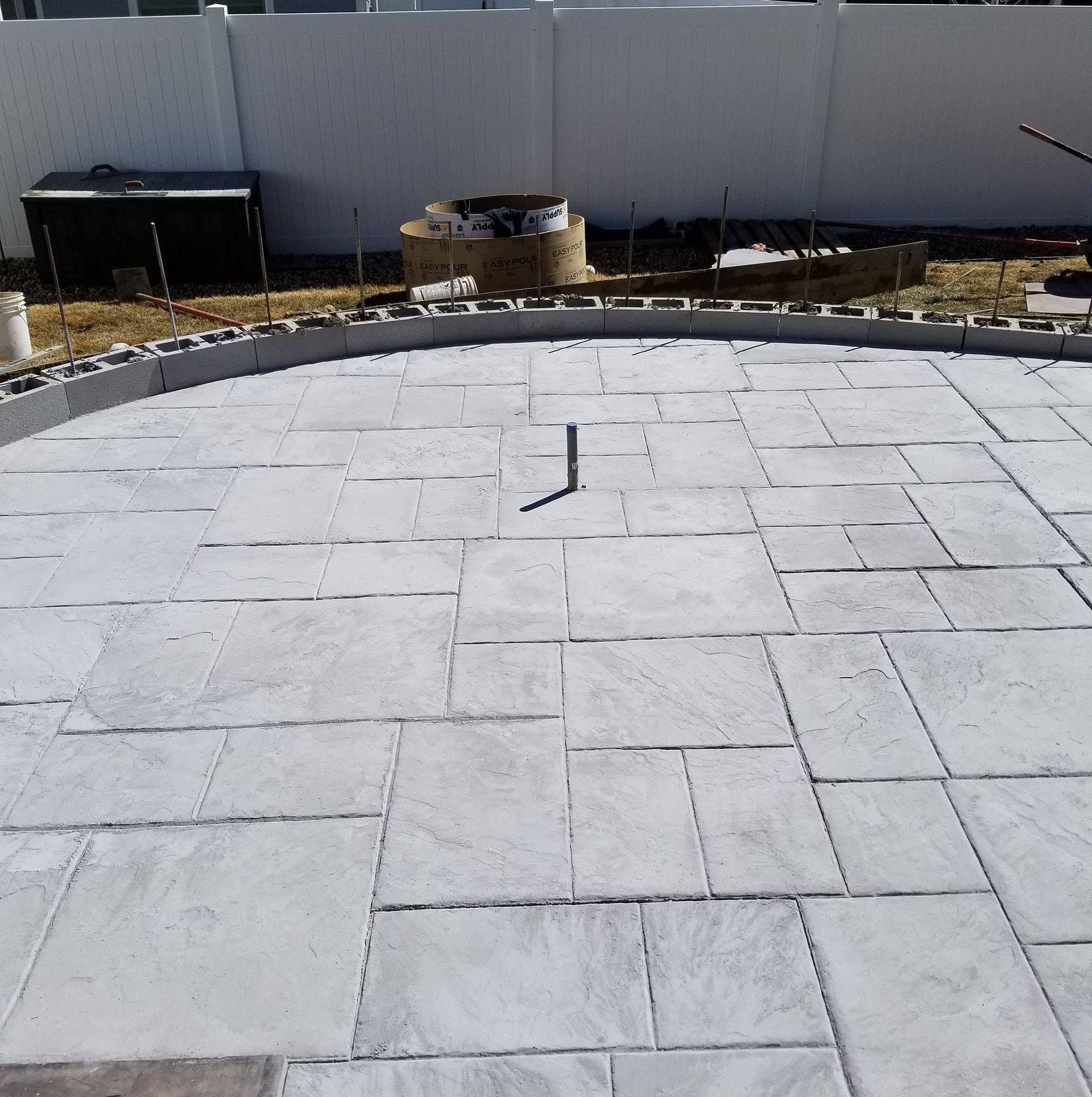
A stampable overlay follows a process similar to traditional stamped concrete. The material is applied at a controlled depth, allowed to set, then textured with stamps or skins. Colors, stains, and release agents create layered designs that add realistic depth and character.
The core promise: keep the slab, change the surface
A stampable overlay transforms an existing concrete patio without full demolition. Instead of removing and replacing a solid slab, homeowners can refresh the appearance with new textures and colors. It saves time, reduces disruption, and gives aging patios a renewed decorative finish.
How Acid Stains Create Depth
Why You Can Skip the Tear-Out
Demolition creates unnecessary risks
Concrete demolition involves more than noise and debris. Heavy equipment can damage nearby landscaping, lawns, walkways, and surrounding concrete surfaces. For homeowners with established outdoor spaces, a full tear-out may create additional repairs beyond the patio itself, increasing disruption and costs.
An overlay uses what already exists
A stampable overlay keeps the existing concrete as the foundation instead of removing it. The surface is prepared, covered, and transformed with decorative textures and patterns like flagstone, slate, or tile, allowing homeowners to refresh their patio without major demolition.
A durable, continuous surface
Stamped overlays provide a seamless surface that can be cleaned and sealed as one unit. Unlike pavers, there are no individual joints where weeds grow or pieces shift. Proper maintenance helps the patio maintain its appearance, strength, and long-term performance.
How Acid Stains Create Depth
The Slab Underneath Decides Everything
Here is the part a good contractor will not skip and a homeowner should not want them to. An overlay is only as good as the concrete it bonds to. Solomon Colors puts it plainly: the slab is the subgrade, and the surface is only as good as the subgrade under it.
Before choosing colors or patterns, the patio must be inspected for stability. Large cracks, settling, heaving, or severe deterioration can prevent an overlay from lasting. A new surface cannot successfully cover movement, unstable concrete, or areas without a solid bonding foundation.
Not every damaged patio requires replacement. Many surfaces can be repaired before applying a stamped overlay, creating a refreshed appearance. However, significant structural issues may require removal and replacement. A professional evaluation determines whether resurfacing is a practical long-term solution.
How Acid Stains Create Depth
Surface Prep Is the Make-or-Break Step
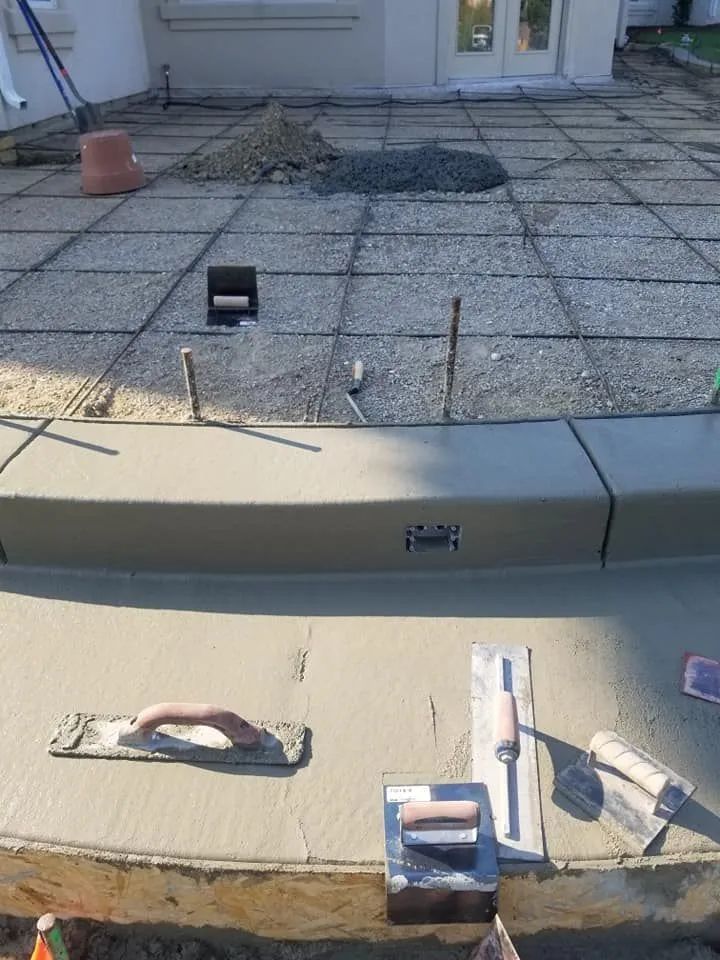
Even a structurally sound slab can fail if preparation is skipped. Proper cleaning and profiling allow the overlay to bond correctly. Poor preparation can cause peeling, separation, and premature failure, making surface treatment one of the most important steps in the entire process.
Before applying an overlay, contaminants like old sealers, grease, oil, rust, adhesives, and mildew must be removed. These materials prevent proper adhesion and create weak points. A clean, properly prepared concrete surface gives the new topping a stronger foundation for lasting performance.
Stampable overlays require the correct Concrete Surface Profile (CSP) to bond effectively. Mechanical preparation creates the necessary texture and porosity for the material to grip. Simply cleaning the slab is not enough; the surface must be properly opened for a durable finish.
Tip: Before you commit to a decorative direction, ask the contractor how they plan to profile your specific slab and how they will confirm it is free of old sealer. A quick field check is to pour a little water on the surface. If it beads instead of soaking in, there is likely sealer or a bond breaker still present that has to be stripped or ground off first.
How Acid Stains Create Depth
Choosing the Look for Your Home
Once the slab is prepared, a stampable overlay opens up many design possibilities. Patterns can mimic flagstone, slate, tile, brick, or wood, while colors come from integral pigments, hardeners, or stains. Custom borders, layouts, and accents create a truly personalized patio surface.
A successful patio design should complement the existing home, landscaping, and outdoor features. Pattern size, texture style, and color selection all influence the final appearance. The goal is creating a surface that feels connected to the property rather than added as an afterthought.
Gray concrete is not the problem; a flat, unfinished appearance is. Adding texture, layered colors, and decorative patterns transforms ordinary gray into a stylish surface. A carefully designed gray-toned overlay can create depth, character, and a more polished outdoor living area.
How Acid Stains Create Depth
Why the Finish Has to Be Sealed and Kept Up
A stamped overlay depends on quality sealer to preserve its appearance and performance. Sealer protects against stains, everyday wear, and UV fading while enhancing the colors and textures. Without proper sealing, the decorative details can quickly lose their depth and become more vulnerable to outdoor damage.
Northern Colorado patios face intense sunlight, snow, moisture, and freeze-thaw cycles. A UV-stable, weather-resistant sealer helps prevent fading, yellowing, and damage from changing conditions. The right breathable sealer protects the overlay while allowing the surface to handle seasonal temperature changes and outdoor exposure.
Sealing is not a one-time task; it is ongoing maintenance. Most stamped overlays need resealing every few years depending on conditions and use. Proper cleaning, preparation, and timing ensure new sealers bond correctly, helping maintain the patio’s appearance, protection, and long-term durability.
Warning: Do not let anyone talk you into skipping surface preparation to save a day, and be wary of an overlay quoted over a slab with active cracking or settlement. A topping applied over a bond breaker or a moving slab will delaminate, crack, or peel, and once a stamped overlay fails that way, the fix is usually removing it and starting over rather than a simple patch. The prep and the slab evaluation are where the money is actually protected.
How Acid Stains Create Depth
How a Pro Approaches the Makeover
Put together, the sequence a professional follows is not complicated, but every step gates the next. First comes an honest evaluation of the existing slab for cracks, settling, and surface soundness, so you know up front whether an overlay is even the right path or whether the patio needs more than a new surface. Next is surface preparation, stripping bond breakers and mechanically profiling the concrete to the CSP the specific overlay requires. Then the stampable overlay is mixed and applied to depth, textured with the chosen pattern before it sets, and colored to the palette that fits your home. Finally the surface is sealed with a UV-stable, freeze-thaw-rated product once it is ready.
Each of those stages is where experience shows. Knowing when a slab can be saved versus when it cannot, hitting the right profile, working the overlay at the correct depth so a stamp does not bottom out, and reading Northern Colorado weather during application and sealing are all judgment calls that separate a patio that still looks intentional in ten years from one that starts lifting in two. That is the difference between a finish and a fix.
Frequently Asked Questions
Can any old patio be stamped over, or does it have to be replaced?
Not every patio qualifies for an overlay. The existing slab must be stable and free from major cracks, settling, or severe damage. Significant structural problems may require repairs or complete replacement before adding a decorative surface.
Will a stamped overlay really look like stone or brick, or will it look fake?
A professionally installed stamped overlay can closely mimic natural materials like stone, slate, brick, tile, or wood. Realistic results depend on quality stamping, color techniques, pattern selection, and skilled craftsmanship rather than the material alone.
Why is surface preparation such a big deal?
Surface preparation determines whether an overlay succeeds or fails. Removing old coatings, cleaning contaminants, and creating the proper texture allows the new material to bond securely. Without proper preparation, even high-quality overlays can eventually crack, peel, or separate.
How often does a stamped concrete patio need resealing here?
Stamped concrete patios typically need resealing every few years, depending on exposure and usage. Northern Colorado weather, including strong sun and freeze-thaw cycles, makes quality sealers and routine maintenance important for protecting color, finish, and durability.
Is a stamped overlay lower maintenance than pavers?
Yes, stamped overlays can require less maintenance than pavers because they create one continuous surface. There are no individual joints where weeds grow or separate pieces that shift. Regular cleaning and resealing help maintain the appearance and performance.
How long before a new overlay can be used and sealed?
The timeline depends on the overlay material, weather, and curing conditions. Contractors determine when foot traffic and sealing are appropriate based on product requirements. Proper curing ensures stronger bonding, better durability, and a longer-lasting decorative finish.
How Acid Stains Create Depth
Turning a Dated Slab Into a Surface You Chose
A plain gray patio is rarely a problem worth demolishing. If the slab is sound, the far smarter move is to keep the concrete you have and change the surface, building a stamped, colored, sealed finish right on top that looks like stone, slate, or brick instead of leftover builder gray. What separates a makeover that lasts from a coating that peels is not the pattern you pick. It is the honest slab evaluation, the correct surface profile, the right depth on the overlay, and a sealer built for high-altitude sun and freeze-thaw. Get those right, and the patio finally looks like something you designed rather than something you inherited.
Book a patio assessment — Before you commit to a new look, the slab under it has to earn it, and that is exactly where a stamped overlay succeeds or fails. With 30
years of experience serving homeowners across Loveland, Colorado, and the surrounding region, Decorative Concrete Finishes LLC
evaluates whether your existing patio is sound enough to overlay, profiles the surface to the right CSP so the topping actually bonds, textures and colors it into the stone, slate, or brick look that fits your home, and seals it for Northern Colorado sun and freeze-thaw. Reach out to schedule your patio assessment and see what your dated gray slab can become.